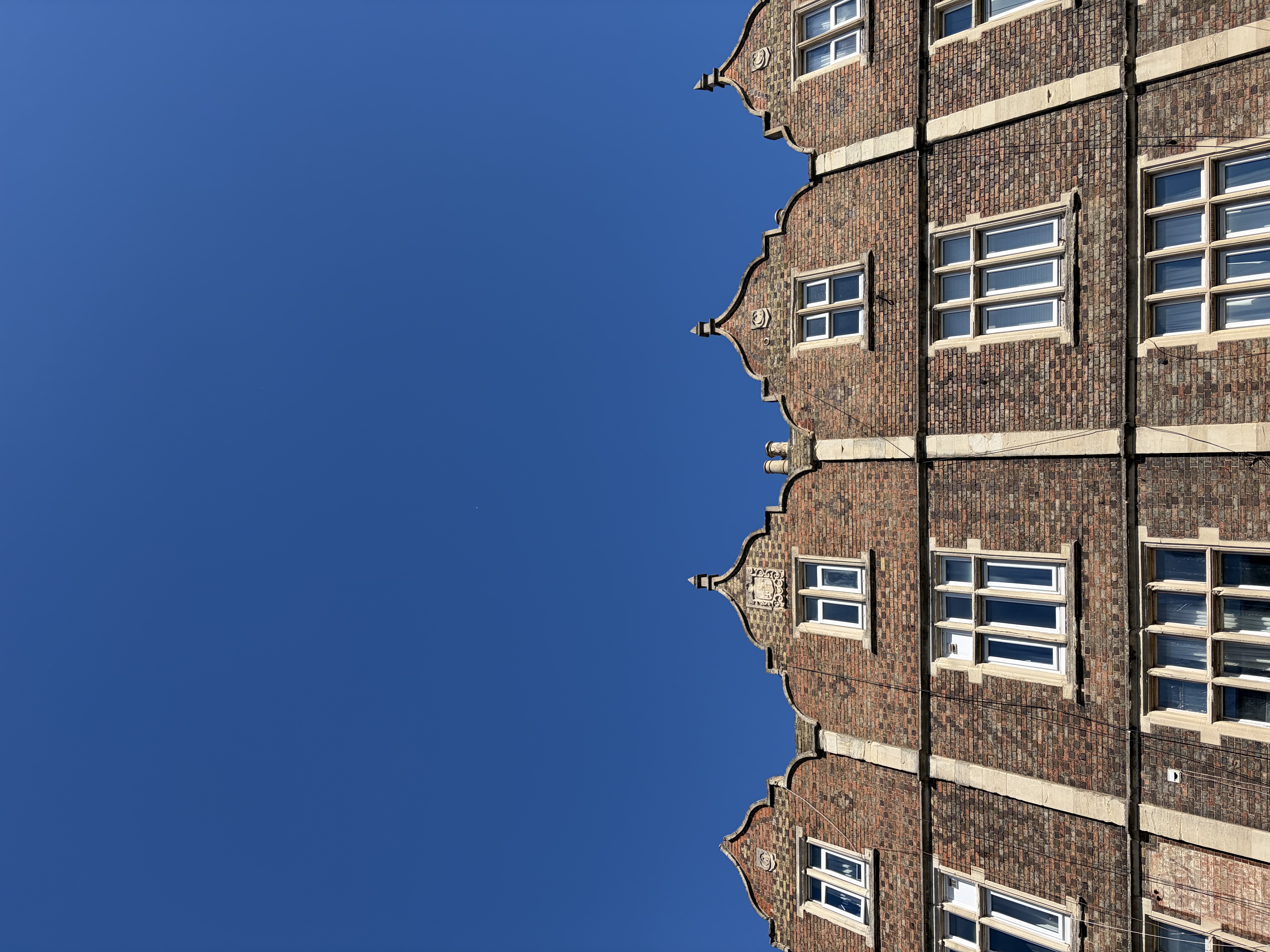
We will talk about Bedford, as it is the county town of Bedfordshire, and therefore representative of the whole.
One may begin by saying that Bedford can be marked out by a profound sense of Protestant English liberty, which one feels everywhere, and by the delirium which is brought about by that characteristic flatness of East England, which allows the full spectre of blue sky to appear overhead.
It is also markedly low in its relief, like the Low Countries of the Netherlands, or the fens of East Anglia. One is reminded how the Low Countries and East Anglia were once connected, by Doggerland, when water was once shored up in those vast ice caps. And one feels that in Bedford, certainly, especially if unfamiliar with such flat terrain, that one is close to the water. And it is in the Low Countries of the Netherlands that the ancestors of the Celts were once spawned, the Bell-Beakers, and in Lower Saxony, as well as the marshy and fen-like Schleswig-Holstein, that the Angles and Saxons once lived. One can imagine their nice migration across wild seas to similar earth, old connected earth, across the water-consumed Doggerland, to find flat and marshy climes in East Anglia, so similar to their homeland. Does life, in some strange ecstasy, emerge from these wetland and bog-like regions, like Aristotle’s Lydian marine laboratory? Bedford, connected by river to Huntingdon, Cambridge, and King’s Lynn, feels connected to that fen-like delirium and life-force. Firmly within East England, its river is wide and broad and flat: easy to ‘ford’, one could say.
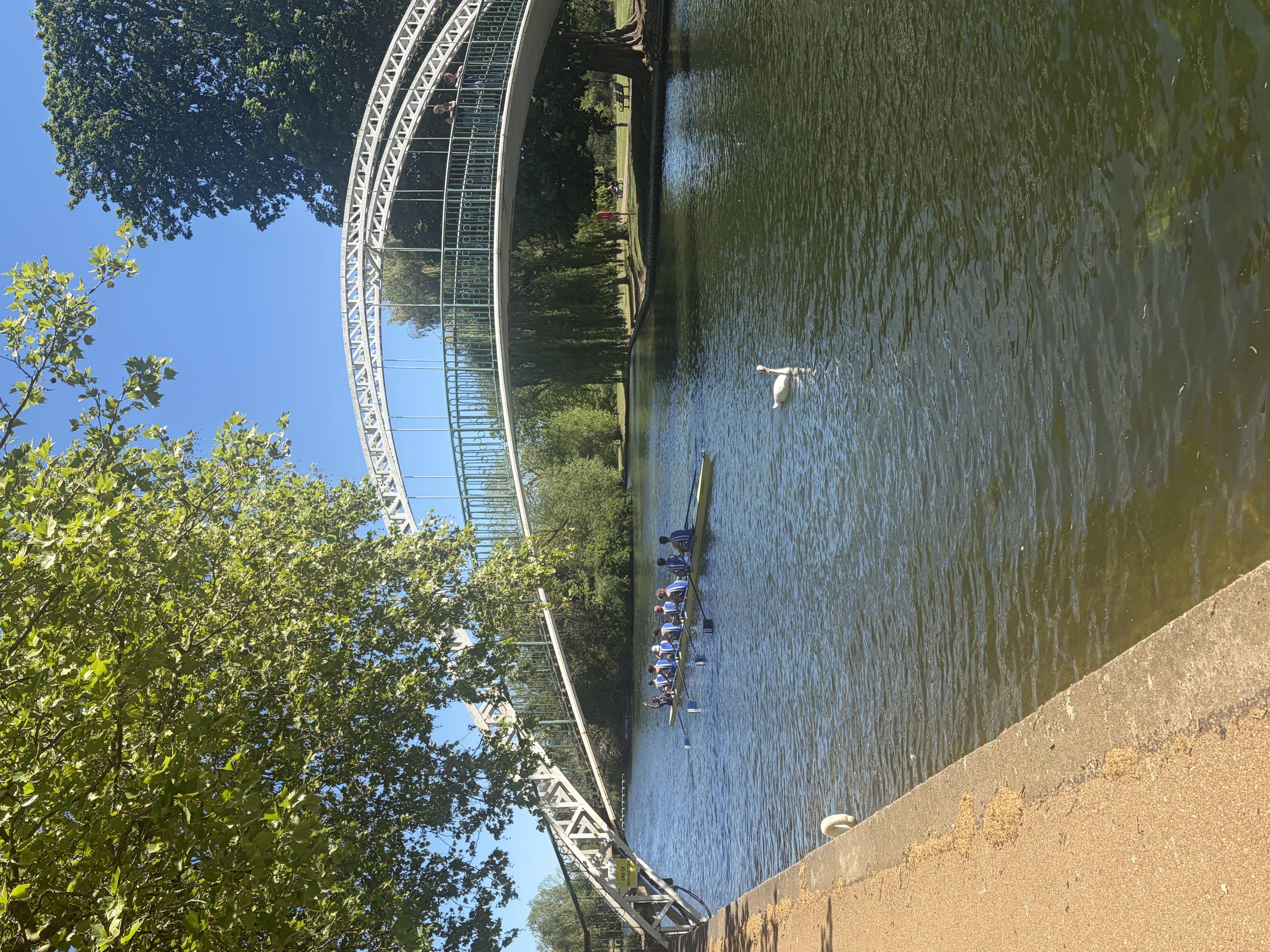
So pleasant is the geography of the river, that the most strenuous of English pastimes, rowing, may be exerted with full force by the boys and girls of the Bedford school, a well-respected private school on a slope overlooking the town, reminiscent of the many rowing clubs along the river Cam.
One cannot help but imagine that this pastime, which seems peculiarly English, originated with the Danes and their long boats; for, indeed, this Bedford was once the boundary between the Danelaw and Saxon realms. Perhaps therein lies that odd and ancient dissociation of spirit in the air. Perhaps the Scandinavian, in fact, brought to Bedford and Cambridge and East Anglia in general that equality so characteristic of Scandinavia today, and supposedly characteristic of the Germans in Tacitus’s Germania. Indeed, out of Oxford and Cambridge, Cambridge is the more liberal and eccentric. There’s something in the marsh water it seems.
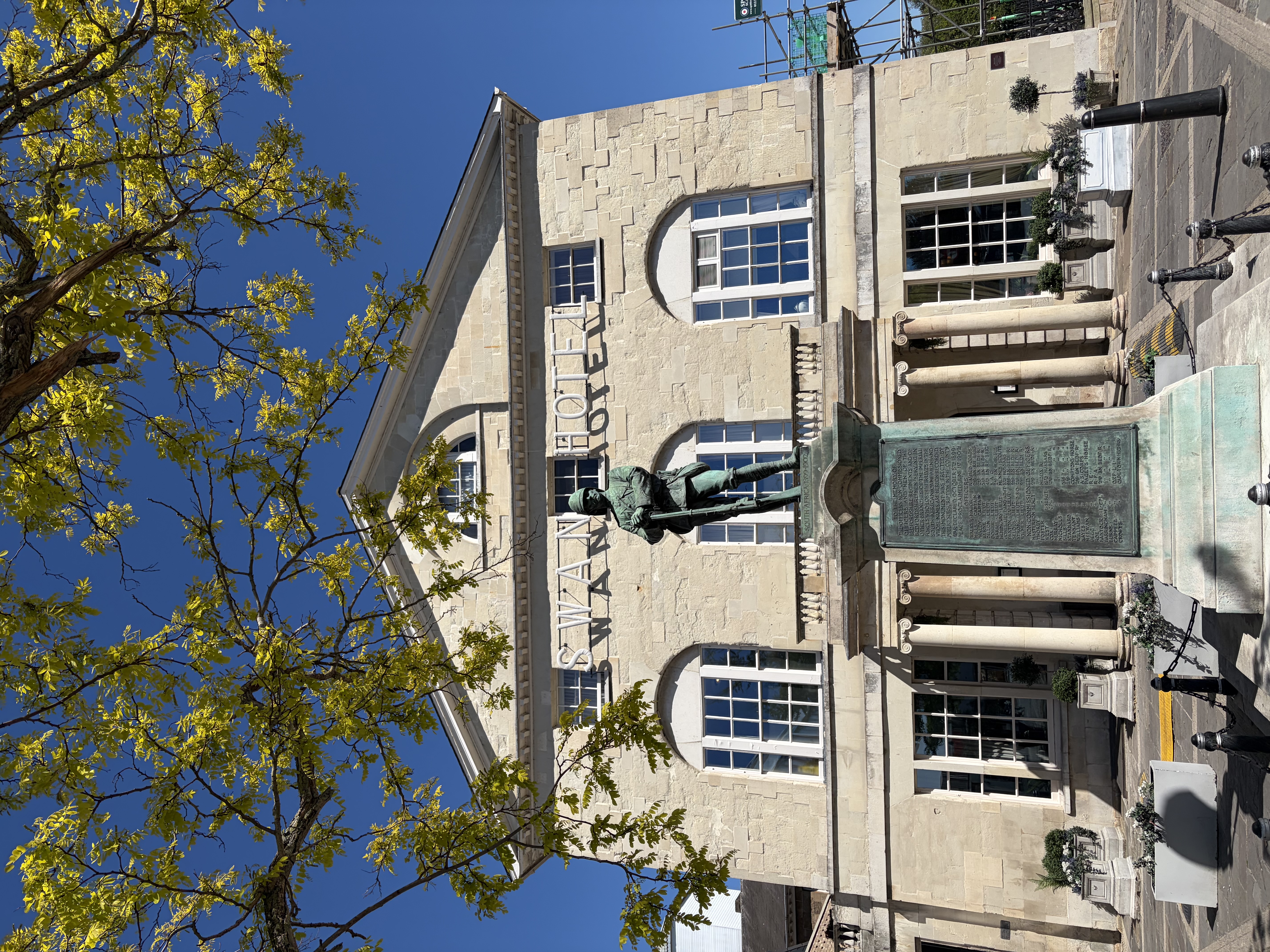
One may also delight at a community of swans which frequent the bridge. Across which the great John Bunyan was once imprisoned, and where he wrote his ’Pilgrim’s Progress’. This, again, was a remarkable work of English Protestantism. The swans seemingly gave the famous Swan Hotel its namesake (or perhaps the inn attracted the swans, who can say). A beautiful and bleached limestone or sandstone makes up this old inn, and guarding the front is a coppered statue for the veterans of South Africa, 1899-1902, a war which admittedly one knows little about. Some stalwart Englishmen fought for our country and people, no doubt.
And so it seems that the Anglo-Saxons who first settled this area sensibly favoured these low crossing points to build their fords, for all the reasons one could imagine, and the same is seen in nearby Cambridge, even up in York.
These places then became centres of trade. In the Anglo-Saxon invasion, the rivers were like motorways which penetrated inland. The same is true of the Viking invasion. But later, they facilitated great trade. The market of Cambridge is really the centre of that town. Norwich too was once a flourishing market centre. And Bedford has all the feel of a stout, even seaside, market town. And it was in these market conditions that the character of English liberty and institutions and prosperity was made. Bedford is a potent distillation of a philosophy that spread across the world, to furthest South Africa, Canberra, and America and one does feel the reach on those places in this town (although perhaps less so America). This small English market town has all the impressions of sunny and English Protestant liberty, looking out to the world, with the spirit of free trade and gentleness.
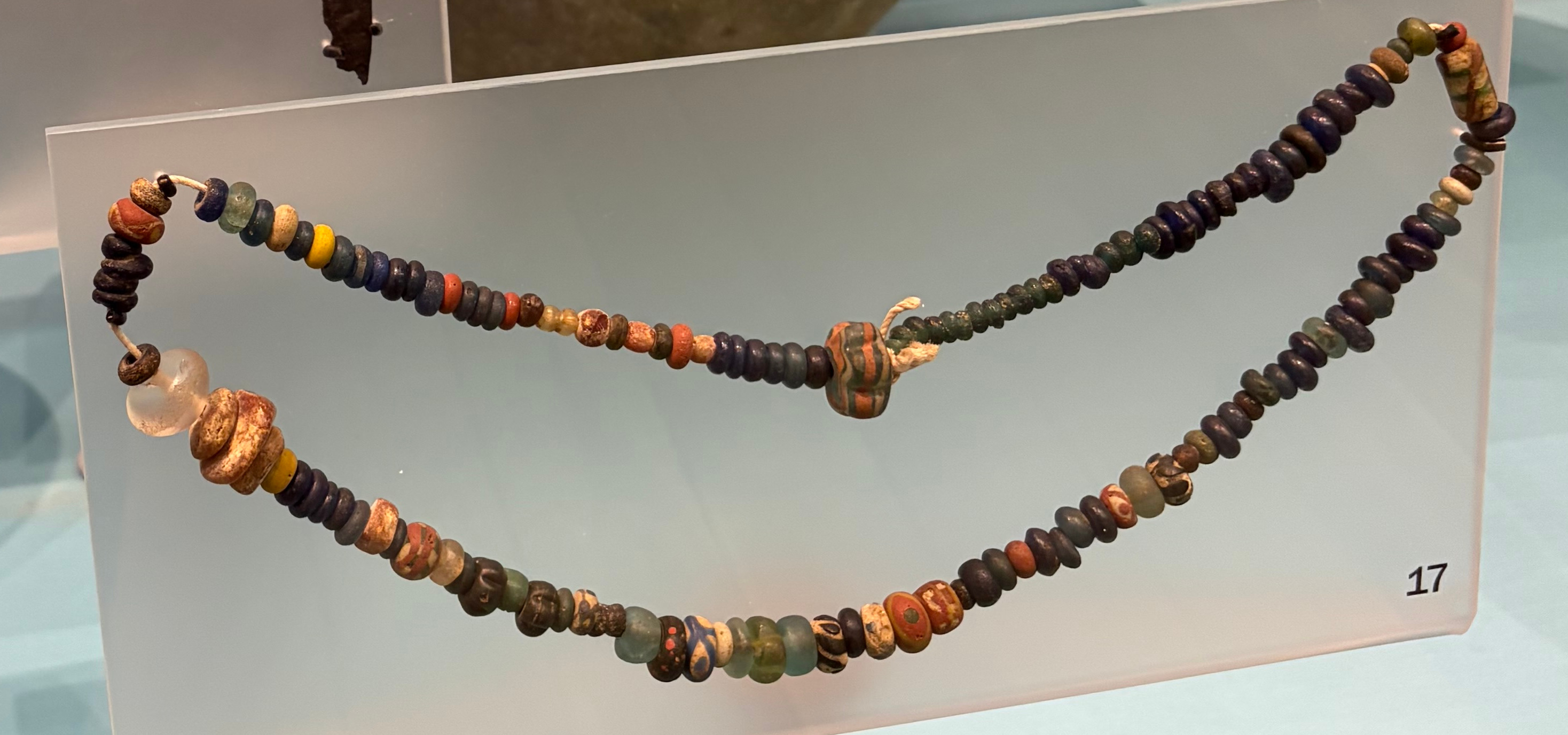
The first Anglo-Saxons were early in this area; as early as the fifth century in fact. Saxon remains are found at Kempston from the earliest point in the migration period. Kempston, named ‘Kem-’ like ‘Cam-’, is a prefix meaning ‘bend in a river’. And in Kempston various Anglo-Saxon artefacts were discovered in the 19th century. One of these is quite endearing and poignant: as if a gift from her husband, the necklace of an Anglo-Saxon lady. It is made up of so many colourful and interesting beads delicately collected. Even in those times, the women were decorating themselves delicately to attract their warrior mates.